
Title: Choosing the Right Commercial Baking Oven for Your Kitchen
In the fast-paced world of commercial kitchens, efficiency, consistency, and reliability are non-negotiable—especially when it comes to baking. Whether you’re running a bustling bakery, a high-volume restaurant, or a catering business, the commercial baking oven is the heart of your operation.
In this post, we’ll cover what makes a commercial baking oven different, key features to look for, and how to choose the best model for your business needs.
🔥 What Is a Commercial Baking Oven?
A commercial baking oven is a heavy-duty appliance designed to handle large volumes of baked goods with consistent performance. Unlike home ovens, commercial units are built for endurance, precision, and frequent use, often operating for hours at a time.
🏭 Types of Commercial Baking Ovens
Each type serves a different purpose depending on your menu and production scale:
- Convection Ovens
Best For: Pastries, cookies, breads, roasting meats
How It Works: Circulates hot air with a fan for even heat distribution
Pros: Fast, consistent baking; energy efficient
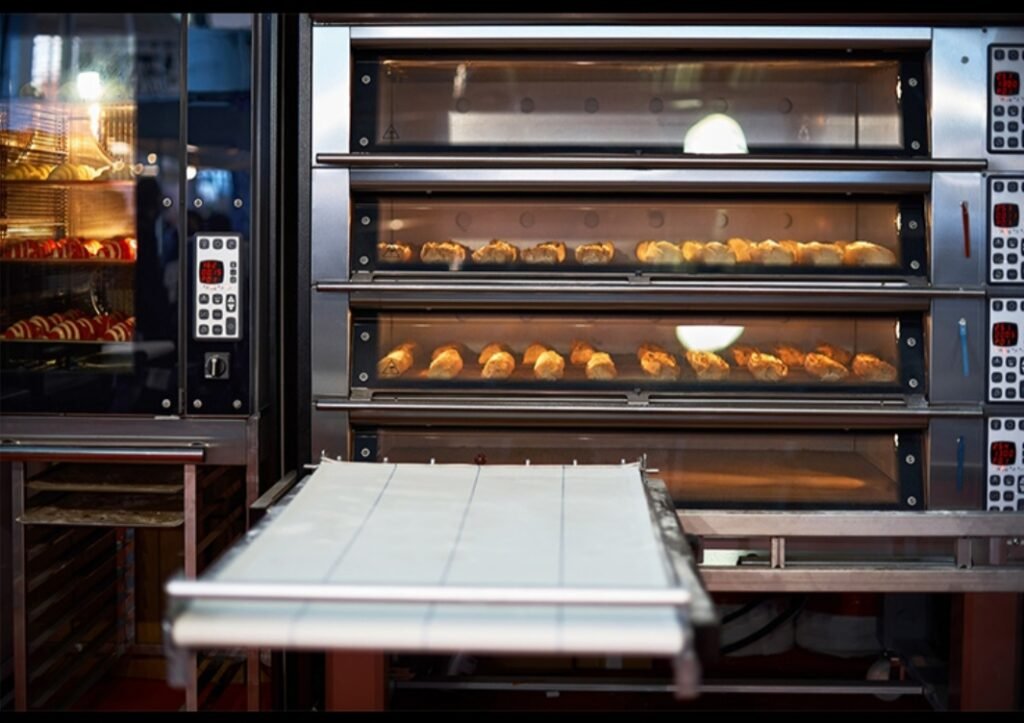
- Deck Ovens
Best For: Artisan bread, pizza, flatbreads
How It Works: Radiant heat from stone or metal decks
Pros: Great crust development; traditional baking method
- Rotary Rack Ovens
Best For: High-volume bakeries
How It Works: Racks rotate inside for even baking
Pros: Bakes hundreds of items at once; ideal for mass production
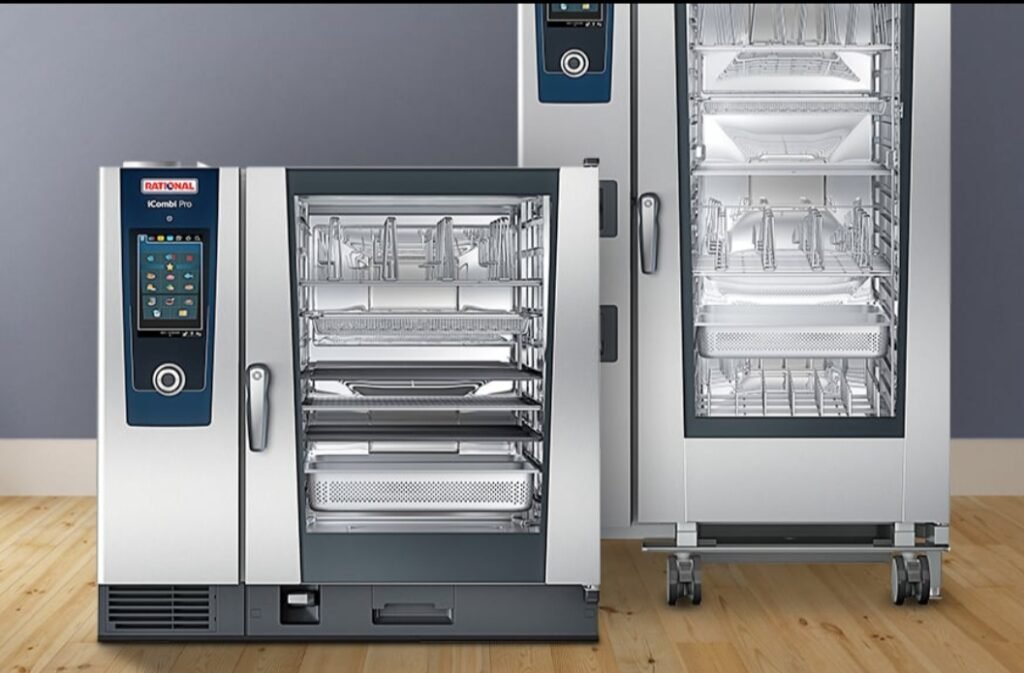
- Combi Ovens (Combination Ovens)
Best For: Versatile baking and cooking
How It Works: Combines convection, steam, and sometimes microwave
Pros: Multi-functional; precise control over moisture and temperature
- Tunnel Ovens
Best For: Industrial-scale baking (factories)
How It Works: Continuous conveyor belt through heating chambers
Pros: Extremely high capacity; automation-friendly
🛠️ Key Features to Consider
When investing in a commercial baking oven, look beyond basic specifications. Consider:
Capacity & Size: Match your daily output needs with available kitchen space.
Heat Recovery Time: Crucial during peak hours.
Programmable Settings: For consistency across batches.
Ease of Cleaning: Stainless steel interiors and removable parts save time.
Energy Efficiency: Look for ENERGY STAR-rated models.
Connectivity: Some modern ovens offer smart features for remote monitoring and diagnostics.
💡 Tips for Choosing the Right Oven
- Know Your Menu: If you’re baking delicate pastries, you need even heat; for artisan bread, radiant heat is essential.
- Plan for Growth: Don’t just buy for your current volume—plan for your future expansion.
- Check Local Regulations: Ventilation, power requirements, and fire safety standards vary by location.
- Test Before You Buy: Reputable suppliers often offer live demos or test kitchens.
🔧 Maintenance and Care
Clean daily to prevent buildup and potential fire hazards.
Schedule regular professional servicing.
Train staff to use the oven properly to avoid damage and ensure consistent results.
Monitor gaskets, heating elements, and control panels for wear and tear.
🧁 Final Thoughts
A commercial baking oven is more than just equipment—it’s a business investment. The right oven boosts productivity, enhances food quality, and contributes to a smooth kitchen workflow. Take the time to assess your needs, budget, and space constraints before making a decision.
Customer Care:
teambakomax@gmail.com
Contact : +91 9625379467